



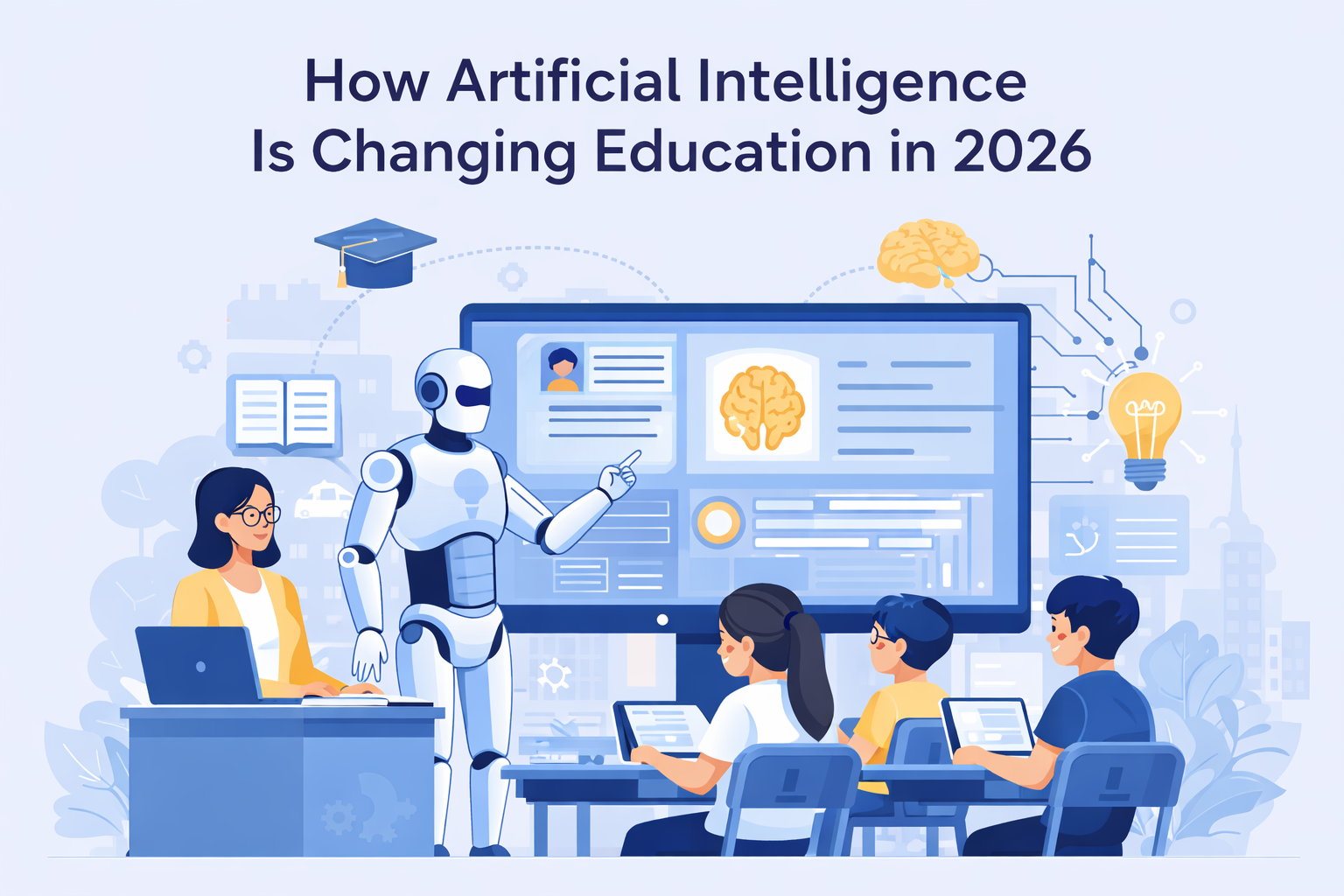
Artificial Intelligence (AI) is no longer a future concept—it has become an active part of modern education. In 2026, AI is reshaping how students learn, how teachers teach, and how educational institutions operate. From personalized learning experiences to smarter classroom tools, AI is playing a key role in making education more accessible, efficient, and inclusive.
This article explores how artificial intelligence is changing education in 2026, highlighting its benefits, real-world applications, and responsible use in learning environments.
How Artificial Intelligence Changing Education Through Personalized Learning
Artificial intelligence in education refers to the use of intelligent systems that can analyze data, adapt to learner needs, and assist educators and students. These systems do not replace teachers or traditional learning methods; instead, they support and enhance the educational process.
In 2026, AI is widely used in digital classrooms, online learning platforms, and educational tools designed for students of all ages.
How Artificial Intelligence Changing Education for Students and Teachers
One of the most significant changes AI has brought to education is personalized learning. Every student learns differently, and AI systems can now adjust learning content based on individual needs.
AI-powered platforms can:
- Analyze student progress
- Identify strengths and weaknesses
- Suggest customized learning paths
- Adapt difficulty levels automatically
This personalized approach helps students learn at their own pace and reduces the pressure of one-size-fits-all education models.
How Artificial Intelligence Changing Education With Smart Classrooms
In 2026, many students use AI tools as learning assistants rather than shortcuts. These tools help with understanding concepts, organizing notes, and managing study schedules.
Common uses include:
- Explaining complex topics in simple language
- Helping students revise lessons
- Assisting with research and summaries
- Supporting language learning
When used responsibly, AI acts as a supportive guide that encourages better learning habits.
Ethical Use of AI and How Artificial Intelligence Changing Education Responsibly
AI has played a major role in making education more accessible across the globe. Students from different regions, including remote and underserved areas, can now access learning resources that were once limited.
AI-powered education tools help by:
- Supporting multiple languages
- Providing affordable or free learning platforms
- Offering accessibility features for learners with disabilities
- Enabling remote and online education
This global accessibility helps reduce educational gaps and promotes equal learning opportunities.
Smart Content Creation and Digital Classrooms
Digital classrooms in 2026 are more interactive than ever. AI helps educators create smarter content, including quizzes, presentations, and learning materials.
Teachers use AI tools to:
- Design interactive lessons
- Generate practice questions
- Analyze class performance
- Save time on repetitive tasks
This allows educators to focus more on teaching, mentoring, and engaging with students.
Ethical and Responsible Use of AI in Education
As AI becomes more common in education, ethical use is increasingly important. Responsible AI use ensures that technology supports learning without compromising academic integrity or privacy.
Educational institutions encourage:
- Transparent use of AI tools
- Respect for student data privacy
- Ethical guidelines for AI-assisted learning
- Critical thinking alongside AI support
In 2026, responsible AI use is a key part of modern education policies.
The Role of Teachers in an AI-Powered Education System
Despite technological advancements, teachers remain essential in education. AI does not replace teachers—it supports them.
Teachers continue to:
- Guide students emotionally and academically
- Encourage critical thinking
- Provide human judgment and creativity
- Ensure ethical learning practices
AI simply helps educators work more efficiently while maintaining the human connection in learning.
AI and Skill Development for the Future
Education in 2026 focuses not only on academic knowledge but also on future-ready skills. AI tools help students develop skills that are important for modern careers.
These include:
- Digital literacy
- Problem-solving
- Research skills
- Time management
- Adaptability to new technologies
By interacting with AI tools responsibly, students gain valuable experience that prepares them for a technology-driven world.
Challenges and Limitations of AI in Education
While AI offers many benefits, it also comes with limitations. Not all educational challenges can be solved with technology alone.
Some concerns include:
- Over-reliance on AI tools
- Data privacy and security issues
- Unequal access to advanced technology
- Need for proper guidance and training
Recognizing these challenges helps educators and learners use AI more thoughtfully.
The Future of Education with Artificial Intelligence
Looking ahead, artificial intelligence will continue to evolve alongside education. Future classrooms are expected to be more adaptive, inclusive, and data-driven.
In the coming years, education may see:
- More intelligent learning platforms
- Greater focus on ethical AI education
- Improved collaboration between humans and technology
- Lifelong learning supported by AI tools
AI’s role in education will grow, but its success will depend on responsible use and human involvement.
Conclusion
Artificial intelligence is transforming education in 2026 by making learning more personalized, accessible, and efficient. From supporting students with intelligent learning tools to helping educators manage classrooms more effectively, AI has become a valuable partner in modern education.
When used ethically and responsibly, AI enhances learning without replacing the human elements that make education meaningful. As technology continues to evolve, the future of education will be shaped by a balanced collaboration between humans and artificial intelligence.