
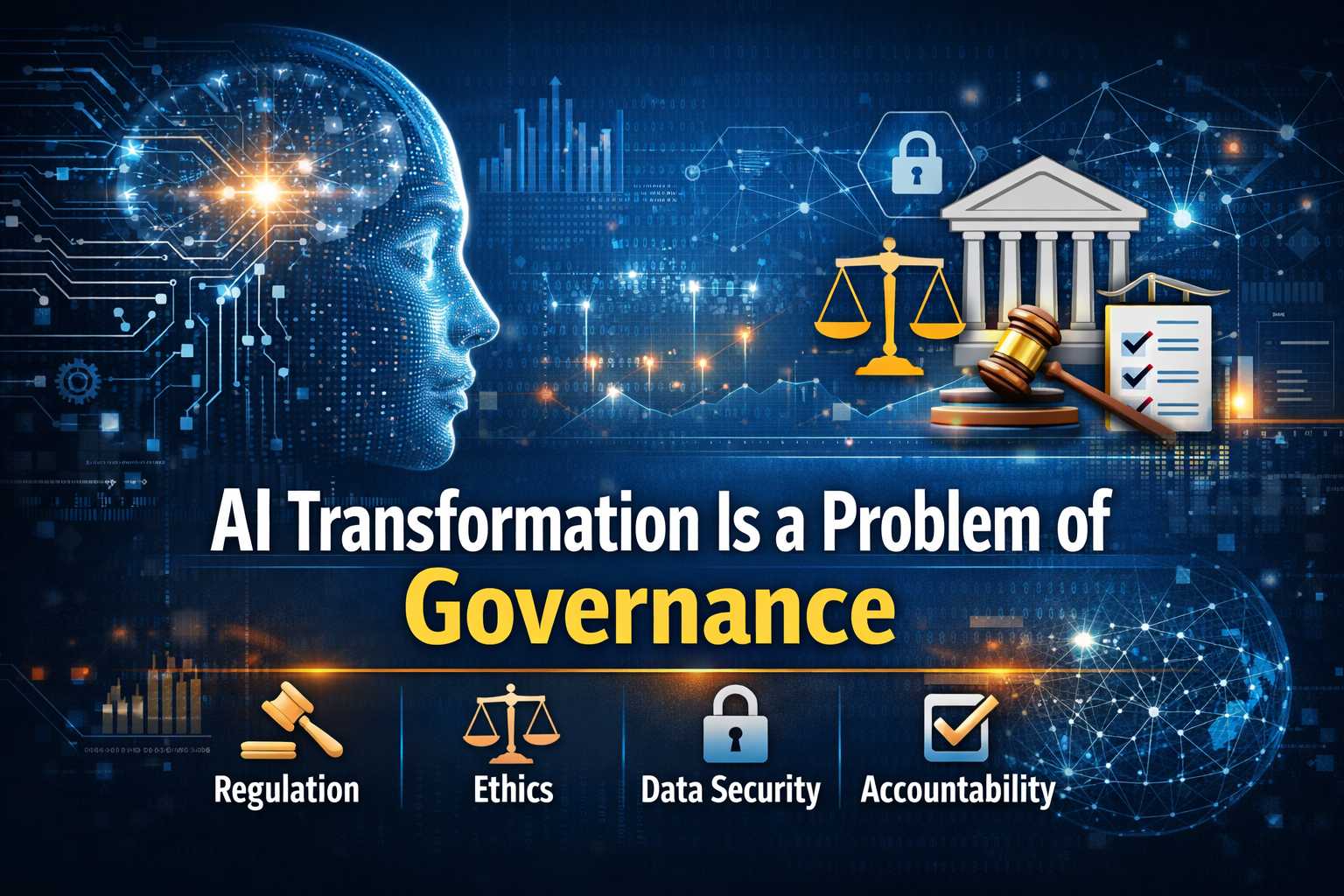
Artificial intelligence is reshaping industries, economies, and public institutions at an unprecedented pace. While most discussions focus on innovation, automation, and efficiency, a deeper issue often goes unnoticed: AI transformation is a problem of governance. The success or failure of AI adoption depends not only on technology but also on leadership, regulation, ethics, and accountability.
In this article, we explore why AI transformation is a problem of governance, what challenges organizations face, and how effective governance frameworks can ensure responsible and sustainable AI growth.
Understanding Why AI Transformation Is a Problem of Governance
When organizations adopt AI systems—such as machine learning models, predictive analytics, or generative AI—they are not just implementing software. They are making decisions that impact privacy, fairness, employment, and public trust.
AI transformation becomes a governance issue because:
- AI systems influence strategic decisions
- Algorithms can introduce bias
- Data privacy must be protected
- Accountability is often unclear
Without proper oversight, AI can create more risks than benefits. This is why experts increasingly argue that AI transformation is a problem of governance, not merely a technical upgrade.
The Governance Challenges Behind AI Transformation
1. Lack of Clear Accountability
One major challenge is determining responsibility. If an AI system makes a flawed decision, who is accountable—the developer, the organization, or the leadership team?
Governance structures must define:
- Roles and responsibilities
- Oversight mechanisms
- Risk management procedures
Without these, AI adoption can lead to legal and reputational consequences.
2. Data Privacy and Security Risks
AI systems rely heavily on data. Improper data management can lead to breaches, regulatory violations, and loss of customer trust.
Global regulations like the General Data Protection Regulation emphasize strict compliance standards. Organizations must integrate privacy policies directly into their AI governance framework.
3. Ethical and Bias Concerns
AI models can unintentionally reinforce social biases if trained on flawed datasets. Governance is required to:
- Audit datasets
- Monitor algorithmic fairness
- Ensure transparency
Ethical oversight committees and independent audits are becoming essential components of AI governance strategies.
4. Regulatory Uncertainty
Governments worldwide are developing AI-specific regulations. For example, the Artificial Intelligence Act introduces risk-based classifications for AI systems.
Organizations must proactively adapt to changing regulations. This further proves that AI transformation is a problem of governance, requiring legal and strategic alignment.
Why Technology Alone Cannot Solve AI Transformation
Many businesses believe AI transformation is primarily a technical challenge. However, deploying advanced systems without governance can result in:
- Compliance violations
- Ethical scandals
- Operational inefficiencies
- Public distrust
AI transformation requires leadership alignment, policy development, and long-term strategic planning. Technology is only one part of the equation.
Building a Strong AI Governance Framework
To address the reality that AI transformation is a problem of governance, organizations should:
Establish Clear Leadership Oversight
Create AI governance committees that include legal, technical, and business leaders.
Implement Transparent Policies
Develop internal policies covering:
- Data usage
- Model validation
- Ethical standards
Conduct Regular Audits
Continuously monitor AI systems for bias, accuracy, and compliance.
Align with Regulatory Standards
Stay updated with global and regional AI regulations to maintain compliance and reduce risk.
The Future of AI Governance
As AI systems become more integrated into everyday life, governance will play an even greater role. Responsible AI adoption requires collaboration between governments, corporations, and civil society.
Ultimately, AI transformation is a problem of governance because it shapes how power, data, and decision-making are managed in the digital age. Organizations that prioritize governance will build trust, ensure compliance, and unlock sustainable innovation.
AI transformation is a problem of governance because it affects accountability, ethics, data privacy, and regulatory compliance. Successful AI adoption requires leadership oversight, transparent policies, and structured risk management—not just advanced technology.
Conclusion
AI is transforming industries at remarkable speed. However, without strong governance structures, AI initiatives may create more harm than progress. The central lesson is clear: AI transformation is a problem of governance, not just technology.
By focusing on accountability, transparency, regulation, and ethical oversight, organizations can harness AI responsibly and build a future that benefits everyone.
FAQ Section :
What does it mean that AI transformation is a problem of governance?
AI transformation is a problem of governance because AI systems impact data privacy, ethics, accountability, and regulatory compliance—not just technology infrastructure.
Why is governance important in AI adoption?
Governance ensures transparency, risk management, ethical oversight, and regulatory alignment when implementing AI systems.
How can organizations improve AI governance?
Organizations can create AI oversight committees, implement ethical policies, conduct regular audits, and align with global AI regulations.
Is AI governance required for regulatory compliance?
Yes, effective AI governance helps organizations comply with data protection and emerging AI regulations worldwide.









Leave a Reply