
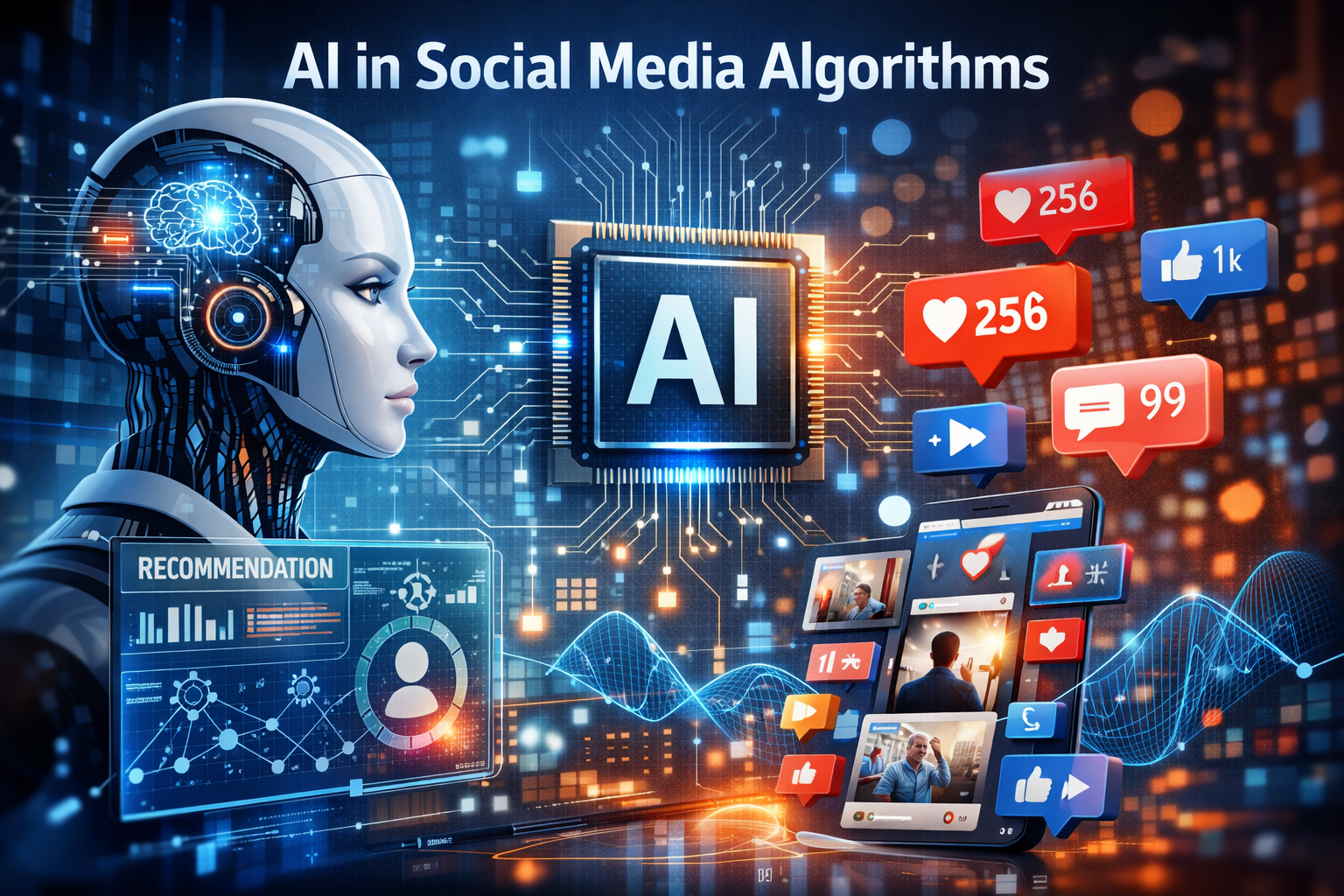
Social media platforms have become a central part of everyday life, influencing how people communicate, consume content, and discover new trends. One of the most common questions in today’s digital landscape is: Is AI used to run social media algorithms The short answer is yes—but the reality is more nuanced and sophisticated.
Artificial intelligence (AI) plays a critical role in how platforms curate content, personalize user experiences, and optimize engagement. This article explores how AI works behind the scenes, why it matters, and what it means for users and businesses alike.
What Are Social Media Algorithms?
Social media algorithms are complex systems designed to decide which content users see on their feeds. Rather than showing posts in chronological order, these algorithms prioritize content based on relevance and engagement.
Key Functions of Social Media Algorithms
- Analyze user behavior and preferences
- Rank and prioritize content
- Recommend posts, videos, and accounts
- Filter out spam or low-quality content
These systems rely heavily on data, and this is where artificial intelligence becomes essential.
Is AI Used to Run Social Media Algorithms?
Yes, AI is a core component in modern social media algorithms. Platforms use machine learning models to process vast amounts of data and make real-time decisions about what content to display.
How AI Powers Algorithms
AI systems analyze multiple signals, including:
- User interactions (likes, shares, comments)
- Watch time and scrolling behavior
- Search history and interests
- Device and location data
By learning from this data, AI continuously improves the accuracy of content recommendations.
Why AI Is Necessary
Without AI, it would be nearly impossible to manage the massive volume of content generated every second. AI allows platforms to:
- Deliver personalized experiences
- Increase user engagement
- Detect harmful or inappropriate content
- Improve advertising targeting
How AI Personalizes Your Social Media Feed
Personalization is one of the most visible outcomes of AI-driven algorithms. Each user sees a unique feed tailored to their preferences.
Content Recommendation Systems
AI uses recommendation engines to suggest content you are most likely to engage with. These systems consider:
- Past interactions
- Time spent on specific posts
- Accounts you follow or frequently visit
For example, if you watch cooking videos frequently, your feed will gradually include more food-related content.
Real-Time Adaptation
AI doesn’t just learn over time—it adapts instantly. If your behavior changes, your feed updates accordingly. This dynamic adjustment keeps content relevant and engaging.
The Role of Machine Learning in Social Media
Machine learning, a subset of AI, is the driving force behind algorithm efficiency.
Types of Machine Learning Used
- Supervised Learning
Trains models using labeled data to predict user preferences. - Unsupervised Learning
Identifies patterns and clusters in user behavior without predefined labels. - Reinforcement Learning
Continuously improves recommendations based on user feedback.
Benefits of Machine Learning
- Faster decision-making
- Improved accuracy in predictions
- Continuous optimization of user experience
These techniques help platforms refine their algorithms and deliver better results over time.
Benefits of AI in Social Media Algorithms
AI-driven algorithms offer several advantages for both users and businesses.
For Users
- More relevant and engaging content
- Personalized recommendations
- Reduced exposure to spam
For Businesses and Creators
- Better audience targeting
- Increased content visibility
- Improved marketing ROI
For Platforms
- Higher user retention
- Enhanced content moderation
- Scalable operations
Challenges and Concerns of AI Algorithms
While AI brings many benefits, it also raises important concerns.
Algorithm Bias
AI systems can unintentionally favor certain types of content, leading to bias in what users see.
Filter Bubbles
Personalized feeds may limit exposure to diverse viewpoints, creating “echo chambers.”
Privacy Issues
The use of personal data for AI training raises questions about user privacy and data protection.
Content Moderation Limitations
Although AI can detect harmful content, it is not always perfect and may require human oversight.
How Social Media Platforms Use AI Today
Most major platforms rely heavily on AI to manage their algorithms.
Common Applications
- Content ranking: Prioritizing posts in feeds
- Ad targeting: Showing relevant advertisements
- Spam detection: Filtering fake accounts and content
- Trend analysis: Identifying viral topics
AI is also used to enhance features like video recommendations, hashtag suggestions, and search results.
The Future of AI in Social Media Algorithms
AI technology continues to evolve, and its role in social media will likely expand.
Emerging Trends
- More transparent algorithms
- Improved ethical AI practices
- Greater user control over feeds
- Enhanced content moderation systems
As AI becomes more advanced, platforms may offer even more personalized and secure experiences.
Conclusion
So, is AI used to run social media algorithms Absolutely. AI is not just a supporting tool—it is the backbone of modern social media systems. From personalizing feeds to detecting spam and optimizing engagement, AI enables platforms to operate efficiently at scale.
However, as reliance on AI grows, so does the need for transparency, fairness, and responsible data usage. Understanding how these systems work empowers users and businesses to make better decisions in the digital space.



Leave a Reply