
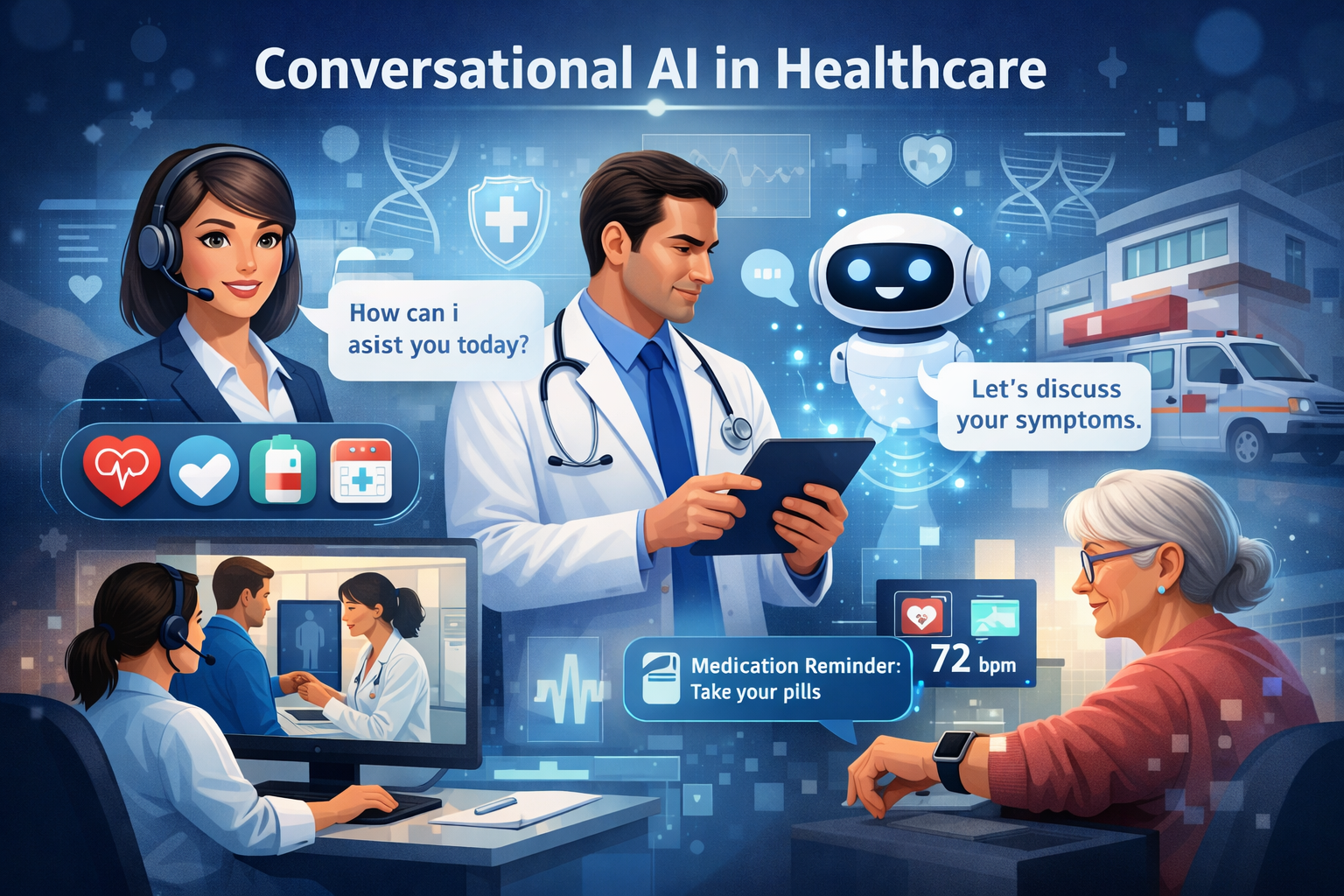
The healthcare industry is rapidly evolving with the integration of advanced technologies, and one of the most impactful innovations is conversational AI in healthcare. From virtual assistants to intelligent chatbots, this technology is reshaping how patients interact with medical systems and how providers deliver care.
As demand for efficient, accessible, and patient-centered services grows, conversational AI is becoming a key driver of digital transformation. This article explores its applications, benefits, challenges, and future potential in modern healthcare systems.
What is Conversational AI in Healthcare?
Conversational AI refers to technologies that enable machines to simulate human-like conversations. These systems use natural language processing (NLP), machine learning, and speech recognition to understand and respond to user queries.
In healthcare, conversational AI tools are designed to assist patients, doctors, and administrative staff by providing real-time information, automating routine tasks, and improving communication.
Key Components of Conversational AI
- Natural Language Processing (NLP)
- Machine Learning Algorithms
- Speech Recognition Technology
- Data Analytics and Integration
These components work together to create seamless, interactive experiences for users.
Applications of Conversational AI in Healthcare
Conversational AI is being used across various healthcare functions, enhancing both clinical and operational processes.
1. Virtual Health Assistants
AI-powered assistants help patients schedule appointments, get medication reminders, and access basic health information without human intervention.
2. Symptom Checking and Triage
Patients can input symptoms into AI systems, which analyze the data and provide guidance on whether medical attention is needed.
3. Patient Engagement
Chatbots improve communication by answering frequently asked questions and providing personalized health tips.
4. Administrative Automation
Hospitals use AI to:
- Manage patient records
- Handle billing inquiries
- Reduce front-desk workload
5. Mental Health Support
Conversational AI tools can offer emotional support and coping strategies, making mental health resources more accessible.
Benefits of Conversational AI in Healthcare
The adoption of conversational AI brings several advantages that improve both efficiency and patient outcomes.
Improved Accessibility
Patients can access healthcare services 24/7, regardless of location. This is particularly valuable in rural or underserved areas.
Enhanced Patient Experience
AI systems provide instant responses, reducing wait times and improving satisfaction.
Cost Efficiency
By automating routine tasks, healthcare providers can reduce operational costs and allocate resources more effectively.
Better Data Management
AI tools collect and analyze patient data, helping healthcare professionals make informed decisions.
Reduced Workload for Staff
Administrative and repetitive tasks are handled by AI, allowing medical staff to focus on critical care.
How Conversational AI Improves Patient Communication
Effective communication is essential in healthcare, and conversational AI significantly enhances this aspect.
Personalized Interactions
AI systems can tailor responses based on patient history and preferences, creating a more individualized experience.
Multilingual Support
Patients can communicate in different languages, breaking down barriers and improving inclusivity.
Real-Time Assistance
Immediate responses to queries ensure patients receive timely information, which is crucial in urgent situations.
Challenges and Limitations
Despite its benefits, implementing conversational AI in healthcare comes with certain challenges.
Data Privacy and Security
Handling sensitive patient information requires strict compliance with data protection regulations.
Accuracy of Information
AI systems must be continuously trained to ensure accurate and reliable responses.
Integration with Existing Systems
Healthcare facilities may face difficulties integrating AI tools with legacy systems.
User Trust and Adoption
Some patients may hesitate to rely on AI for medical advice, preferring human interaction.
Future of Conversational AI in Healthcare
The future of conversational AI in healthcare looks promising, with ongoing advancements expected to enhance its capabilities.
Integration with Wearable Devices
AI systems may connect with health trackers to provide real-time monitoring and insights.
Advanced Predictive Analytics
Future AI tools could predict health issues before they become critical, enabling preventive care.
Voice-Enabled Healthcare Systems
Voice assistants may become a standard feature in hospitals and clinics, simplifying interactions.
Improved Emotional Intelligence
AI systems are being developed to better understand emotions, making interactions more empathetic.
Best Practices for Implementing Conversational AI
Healthcare organizations should follow strategic approaches to maximize the benefits of AI.
Key Implementation Tips
- Ensure compliance with healthcare regulations
- Prioritize data security and patient privacy
- Continuously train AI models with updated data
- Combine AI with human oversight
- Focus on user-friendly design
These practices help ensure safe and effective deployment.
Conclusion
Conversational AI in healthcare is revolutionizing the way medical services are delivered. By improving accessibility, enhancing patient communication, and streamlining operations, it offers significant value to both patients and providers.
While challenges such as data security and system integration remain, ongoing advancements are expected to address these concerns. As healthcare continues to embrace digital transformation, conversational AI will play an increasingly vital role in shaping the future of patient care.








Leave a Reply