
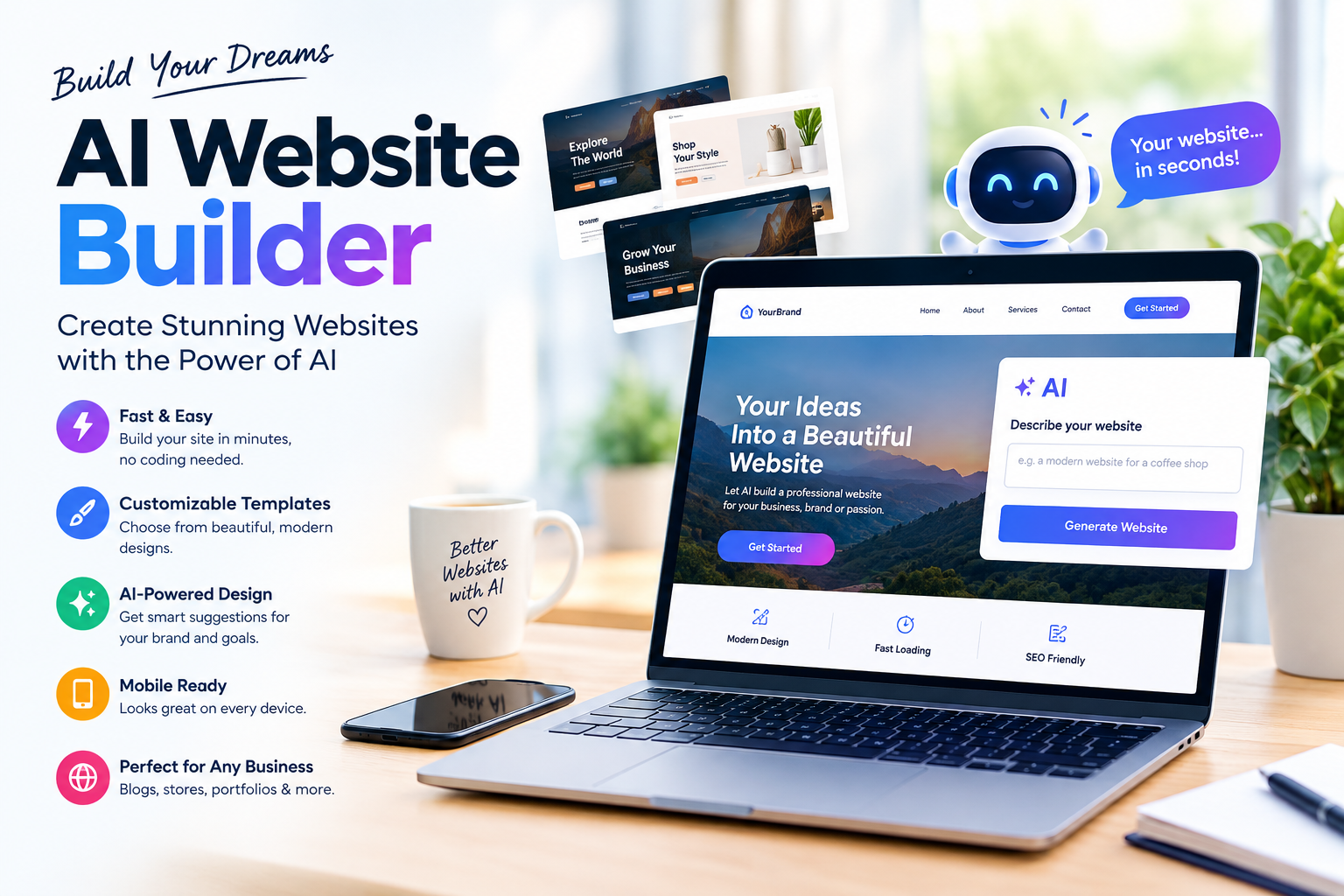
AI Website Builder: A Smarter Way to Create a Website
Creating a website traditionally required a combination of design skills, coding knowledge, content writing, and technical experience. For beginners and small businesses, building a professional website could take days or even weeks.
Today, Artificial Intelligence is changing that process.
An AI website builder can help users create websites by using simple instructions instead of requiring advanced coding or design skills. AI can assist with website layouts, written content, images, navigation, and even search engine optimization.
This makes website creation more accessible to entrepreneurs, freelancers, creators, startups, and people who simply want to build a website without dealing with complicated technical processes.
In this guide, we’ll explain what an AI website builder is, how it works, its major benefits, limitations, and how you can use AI to create a more effective website.
What Is an AI Website Builder?
An AI website builder is a website creation platform that uses artificial intelligence to automate parts of the website-building process.
Instead of starting with a completely blank page, users can provide information about their business, website purpose, preferred style, or industry. The AI then uses that information to generate an initial website structure.
Depending on the platform, AI may help create:
- Website layouts
- Homepage content
- Product descriptions
- About pages
- Contact pages
- Images and visual elements
- Navigation menus
- Calls to action
- SEO content
- Mobile-friendly designs
The exact features vary between platforms, but the main idea is the same: AI reduces the amount of manual work required to create a website.
How Does an AI Website Builder Work?
Most AI website builders follow a relatively simple process.
1. Describe Your Website
The first step usually involves telling the AI what kind of website you want.
For example, you might enter:
“Create a modern website for a local digital marketing agency offering SEO and social media marketing services.”
The AI uses this information to understand the purpose of your website.
2. AI Generates the Website Structure
The system can then create an initial structure based on your instructions.
This may include:
- Homepage
- Services section
- About section
- Testimonials
- Contact section
- Call-to-action buttons
Some platforms can generate multiple pages automatically.
3. Customize the Design
After the initial website is created, you can modify the design.
You may be able to change:
- Colors
- Fonts
- Images
- Sections
- Page layouts
- Buttons
- Menus
This allows users to personalize the AI-generated website rather than accepting the first version exactly as it is.
4. Review and Publish
Before publishing, you should carefully review the website.
Check the content, links, images, contact information, mobile appearance, page speed, and SEO settings.
Once everything looks correct, the website can be connected to a domain and published.
Benefits of Using an AI Website Builder
AI website creation offers several advantages, especially for people without technical experience.
Faster Website Creation
One of the biggest benefits is speed.
Traditional website development can involve planning, wireframing, designing, writing content, coding, testing, and optimization.
AI can automate parts of this workflow, allowing users to create an initial website much faster.
Instead of spending hours deciding how to structure a homepage, AI can provide a starting point within minutes.
No Advanced Coding Skills Required
Not everyone knows HTML, CSS, JavaScript, or other programming languages.
An AI website builder can make website creation easier for beginners by allowing them to describe what they want using natural language.
For example:
“Add a section explaining our three main services and include a button that says Get a Free Consultation.”
AI-powered tools can use instructions like this to help build or modify website sections.
AI Can Help Create Website Content
Website design is only one part of building a successful website.
You also need useful content.
AI can help create drafts for:
- Homepage copy
- Service descriptions
- Blog posts
- FAQs
- Product descriptions
- Headlines
- Calls to action
However, AI-generated content should always be reviewed and edited before publication.
Adding your own expertise, examples, experiences, and brand voice can make the content more useful and authentic.
AI Website Builders and SEO
Search engine optimization is an important part of building a website.
Some AI website builders provide SEO-related features that can help users optimize their pages.
These may include:
- SEO titles
- Meta descriptions
- Heading suggestions
- Keyword recommendations
- Image alt text
- Internal linking suggestions
- Content optimization
However, using AI does not automatically guarantee higher Google rankings.
Good SEO still requires useful content, strong website structure, good user experience, relevant keywords, technical optimization, and authoritative information.
AI should be treated as a tool that assists with SEO rather than a replacement for an overall SEO strategy.
AI Website Builders for Small Businesses
Small businesses often have limited budgets and resources.
Hiring a professional developer may not always be practical for a simple business website.
An AI website builder can provide a starting point for businesses such as:
- Restaurants
- Local service providers
- Freelancers
- Consultants
- Real estate businesses
- Online stores
- Marketing agencies
- Personal brands
- Photographers
- Coaches
For example, a local cleaning company could use AI to create a website containing service information, customer reviews, contact details, business hours, and a quote request form.
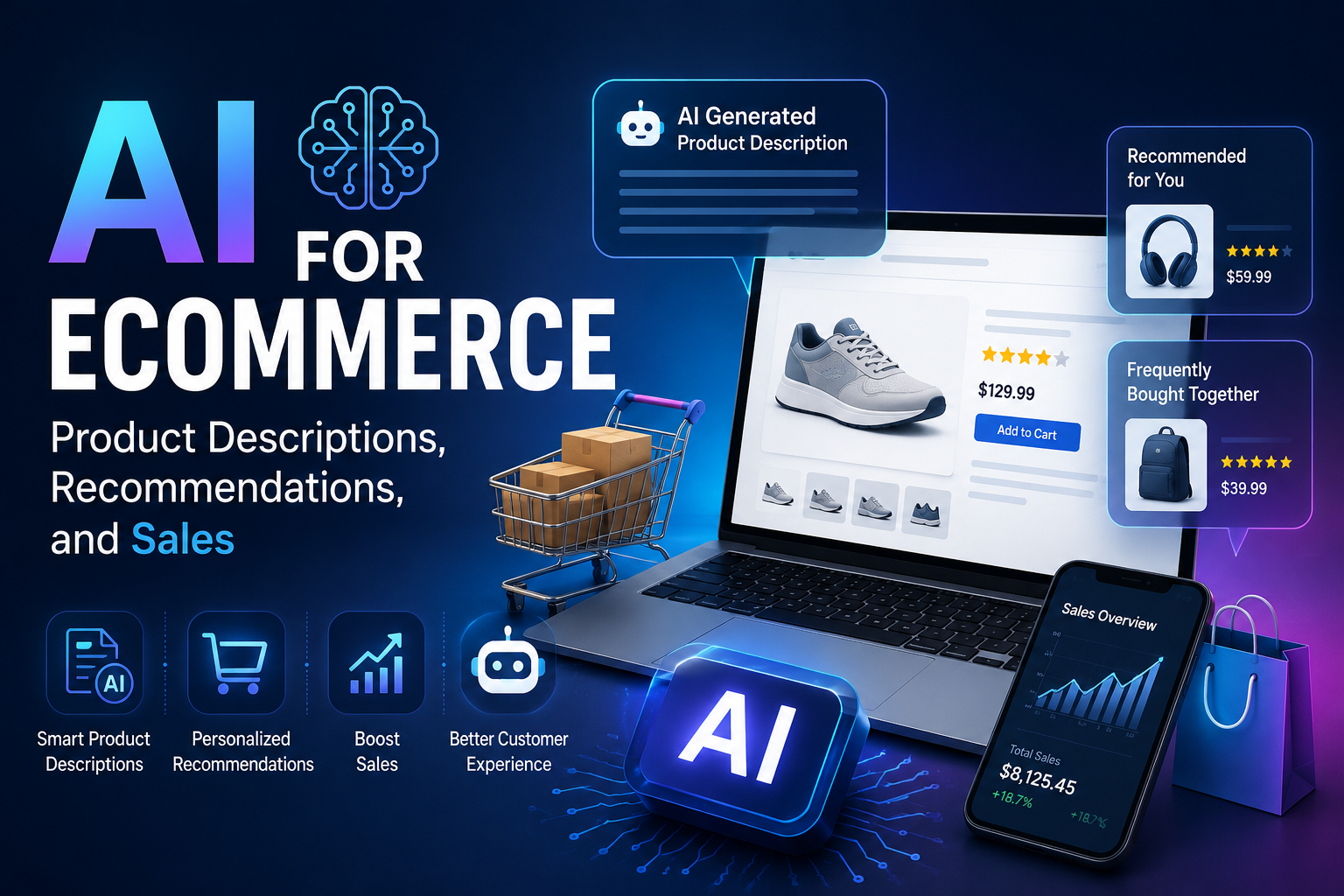
AI Website Builder for Online Stores
AI is also becoming useful for eCommerce websites.
Online store owners can use AI to help with:
- Product descriptions
- Product categorization
- Product recommendations
- Homepage content
- Promotional copy
- FAQs
- Email campaigns
- Customer support
AI can also help organize large amounts of product information, saving store owners significant time.
For businesses with hundreds of products, automated content generation can be particularly useful.
AI Can Improve Website Personalization
Modern websites don’t necessarily need to provide exactly the same experience to every visitor.
AI can analyze customer behavior and help businesses create more personalized experiences.
For example, an online store could recommend products based on a customer’s browsing or purchasing behavior.
Similarly, an educational website could suggest relevant courses based on the visitor’s interests.
Personalization can make websites more useful because visitors are more likely to see information relevant to their needs.
AI Website Builders for Beginners
For beginners, the biggest advantage is simplicity.
Instead of learning multiple technical tools, users can focus on answering basic questions:
- What is my website about?
- Who is my target audience?
- What services or products do I offer?
- What action should visitors take?
- What information do customers need?
Once these questions are clear, AI can help transform the ideas into a website structure.
However, beginners should still learn basic concepts such as domains, hosting, SEO, website security, and responsive design.
AI makes the process easier, but understanding the fundamentals remains valuable.
Limitations of AI Website Builders
Despite their advantages, AI website builders are not perfect.
AI-Generated Designs May Need Editing
An automatically generated website may look professional but still require customization.
The first version may not perfectly match your brand, audience, or business goals.
Human design decisions are still important.
AI Content Can Contain Errors
AI-generated text may contain inaccurate information, generic statements, or claims that don’t apply to your business.
Always review important content before publishing it.
Advanced Websites May Require Developers
Simple business websites can often be created with AI-powered tools.
However, complex websites with custom applications, advanced databases, specialized integrations, or unique functionality may require professional development.
SEO Still Requires Human Strategy
AI can assist with SEO, but rankings depend on many factors.
Simply generating hundreds of AI-written pages is not a reliable SEO strategy.
The focus should remain on creating genuinely useful content for users.
How to Choose the Right AI Website Builder
There are many AI-powered website creation tools available, so choosing one can be confusing.
Before selecting a platform, consider the following factors.
Ease of Use
The platform should be easy to understand, especially if you’re a beginner.
Customization
Look for enough design flexibility to make the website match your brand.
SEO Features
Check whether the platform provides control over titles, descriptions, URLs, headings, and other important SEO elements.
Mobile Responsiveness
Your website should work properly on smartphones and tablets.
Performance
A visually attractive website is not enough. Pages should load quickly and provide a smooth user experience.
Integrations
Check whether the platform supports the tools you need, such as analytics, email marketing, payment systems, forms, or eCommerce features.
Pricing
Compare the available plans and consider domain, hosting, storage, and additional feature costs.
Best Practices for Using an AI Website Builder
To get better results from AI, follow a few simple practices.
Start with a clear goal. Know what you want visitors to do on your website.
Give AI detailed instructions. Instead of saying “make a website,” explain your industry, audience, services, tone, and desired features.
Edit AI-generated content. Add original information and make sure everything is accurate.
Keep the design simple. Too many animations, colors, and unnecessary elements can make a website difficult to use.
Optimize for mobile devices. A large percentage of website visitors use smartphones.
Focus on users first. SEO is important, but the website should primarily provide a useful experience for visitors.
Test everything before publishing. Check forms, links, buttons, images, menus, and checkout processes.
The Future of AI Website Building
AI is likely to become an increasingly important part of website development.
Future AI website tools may allow users to create and modify websites through more natural conversations. Instead of manually editing individual sections, users may simply describe the changes they want.
For example:
“Make the homepage more focused on our premium customers and add a comparison section below the pricing.”
AI could then make the requested changes automatically.
AI may also become more deeply integrated with analytics, personalization, content creation, eCommerce, and marketing.
This could make websites easier to build, manage, and continuously improve.
Is an AI Website Builder Right for You?
An AI website builder can be a useful option if you want to create a website quickly without extensive technical knowledge.
It can be particularly helpful for beginners, freelancers, startups, small businesses, and creators who need a professional online presence without building everything from scratch.
However, AI should not be viewed as a complete replacement for human creativity and expertise.
The best results usually come from combining AI’s speed and automation with human judgment, original ideas, accurate information, and strategic planning.
Conclusion
An AI website builder has changed the way many people approach website creation. Instead of starting with a blank page and learning complex technical skills, users can rely on AI to generate layouts, content, design ideas, and other website elements.
For small businesses and beginners, this can significantly reduce the time and effort required to establish an online presence.
However, creating a successful website involves more than simply generating pages. You still need a clear purpose, useful content, good design, strong SEO fundamentals, mobile optimization, and a focus on the people visiting your site.
AI can handle much of the repetitive work, but human creativity and decision-making remain essential. When used correctly, AI can become a powerful assistant for building and improving modern websites.
Frequently Asked Questions (FAQs)
What is an AI website builder?
An AI website builder is a tool that uses artificial intelligence to help users create websites. It can generate layouts, content, design elements, and other website components based on user instructions.
Can I build a website with AI without coding?
Yes. Many AI-powered website builders are designed for people without coding experience. They allow users to create websites through templates, visual editors, or natural-language instructions.
Are AI website builders good for SEO?
They can provide useful SEO features such as meta titles, descriptions, headings, and content suggestions. However, an AI website builder alone does not guarantee search engine rankings.
Can AI create an eCommerce website?
Yes. AI can help create and manage different parts of an eCommerce website, including product descriptions, categories, content, recommendations, and customer support.
Is an AI website builder suitable for a small business?
Yes. Small businesses can use AI website builders to create professional websites without requiring extensive technical knowledge or development resources.
Will AI replace web developers?
AI can automate many repetitive website development tasks, but complex projects still require human developers for custom functionality, technical architecture, security, integrations, and advanced problem-solving.
Can AI improve an existing website?
Yes. AI can assist with rewriting content, improving page structure, generating SEO suggestions, creating new sections, analyzing user behavior, and developing ideas for improving the overall website experience.




Leave a Reply